With 5G networks expanding rapidly, questions about EMF exposure are more common than ever. There's a lot of noise online — some of it alarmist, some dismissive. This guide separates what's established from what's speculation, cites the main scientific bodies, and explains where signal shielding genuinely fits in.
What Is 5G?
5G is the fifth generation of mobile network technology. It uses a wider range of radio frequencies than 4G — including higher "millimeter wave" bands — to deliver faster speeds and lower latency. Like 4G, Wi-Fi, and FM radio, these are non-ionising radiofrequency (RF) signals: they don't carry enough energy per photon to break chemical bonds or damage DNA the way ionising radiation (X-rays, gamma rays, UV) can. This is the single most important physical distinction in the whole 5G debate.
What the Science Bodies Actually Say
The bodies that set and review RF exposure limits are broadly aligned:
- The World Health Organization states that, to date, no adverse health effects have been causally linked to exposure to wireless technologies at levels below international guideline limits. See the WHO's overview at who.int — 5G and health.
- The International Commission on Non-Ionizing Radiation Protection (ICNIRP) published updated RF exposure guidelines in 2020 that explicitly cover 5G frequencies. Their guidelines are the basis for regulation in many countries: icnirp.org — radiofrequency guidelines.
- The WHO's International Agency for Research on Cancer (IARC) classified RF electromagnetic fields as "possibly carcinogenic to humans" (Group 2B) in 2011 — the same category as pickled vegetables and aloe vera extract. "Possibly" (2B) signals limited evidence warranting further study, not established harm. Context: iarc.who.int.
Facts vs Fiction
- Fact: 5G RF is non-ionising — the same physical category as Wi-Fi and FM radio.
- Fact: Measured RF levels around typical 5G infrastructure sit well below the ICNIRP public-exposure limits.
- Fact: The phone in your hand is a far closer RF source than a distant tower — proximity matters more than tower count.
- Fiction: "5G spreads viruses." There is no mechanism by which radio waves transmit biological agents; this claim has been repeatedly debunked.
- Unsettled: Long-term, real-world effects of the newest high-frequency bands are still being studied — which is exactly why researchers and bodies like ICNIRP keep reviewing the evidence.
Where Shielding Genuinely Fits
Whatever your read on the health debate, there are practical, non-health reasons people choose to reduce or block RF around specific devices:
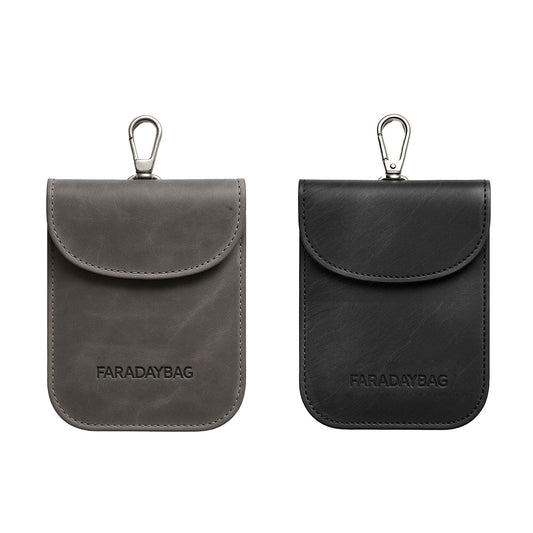
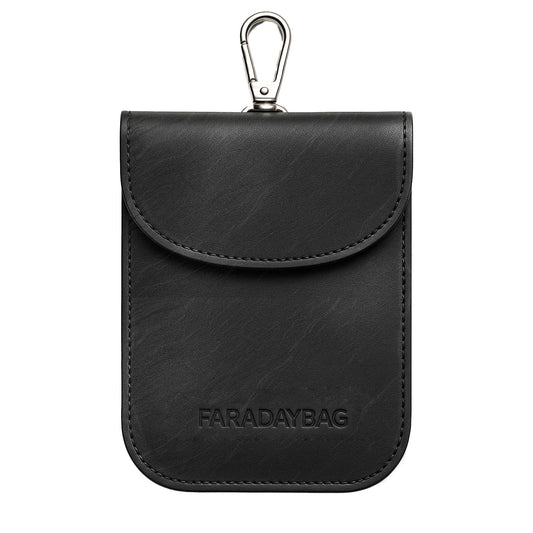
- Privacy & security: A sealed Faraday pouch stops a phone from transmitting or receiving — no location pings, no remote access — which is a concrete, verifiable function.
- Relay-theft prevention: Shielding a keyless car fob blocks the signal thieves relay to unlock a car.
- Precautionary reduction: If you'd simply rather lower your everyday exposure where it's easy to do so, that's a reasonable personal choice — distance, airplane mode, and shielding specific sources all reduce exposure.
What shielding does not do: it doesn't "cure" anything, and no honest product can promise a health outcome. A Faraday bag blocks signals to the device inside it — that's the claim we stand behind, because it's testable (seal a phone, call it, and it won't ring).
How to Check for Yourself
If you're curious about the RF and EMF levels in your own home, you don't have to take anyone's word for it — you can measure. An EMF meter shows you where the higher-emission spots actually are (often it's your own devices and wiring, not a distant tower). We cover this in our guide to measuring EMF at home.
Practical Products
- 5G EMF shield products — silver-fiber apparel and covers
- Wi-Fi router covers — reduce emissions from your router while staying online
- Signal-blocking pouches — physical, testable phone shielding
- EMF & RF detectors — measure before you shield
This article is general information, not medical advice. If you have specific health concerns about RF exposure, talk with your doctor.
Using This Page
Journalists and editors are welcome to cite this — please credit the original bodies (WHO, ICNIRP, IARC) and link to their pages.
More Sourced References
Relay car theft data · RFID skimming data · UWB & relay attacks · Phone tracking · How we write & what we don't claim