Best Faraday Bags 2026 — Picked by Use Case
We build these bags ourselves, so instead of pretending to have independently lab-tested every competitor, here are our own picks by category — based on real size, material, and price differences you can check on each product page. Availability changes — each product page shows whether that item is in stock right now.
Last updated: August 21, 2026 — picks re-verified against current sizes and prices.
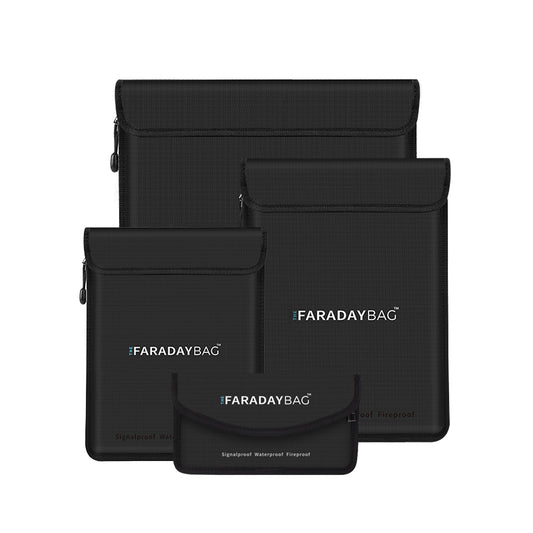
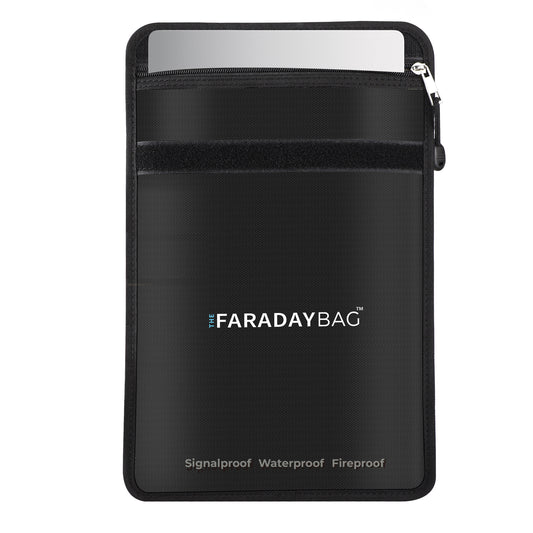
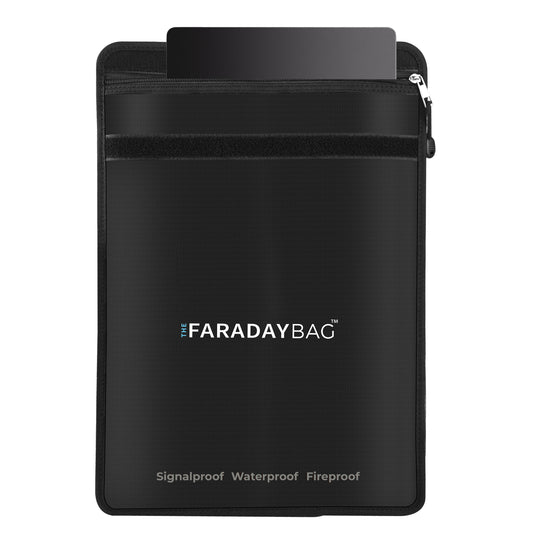
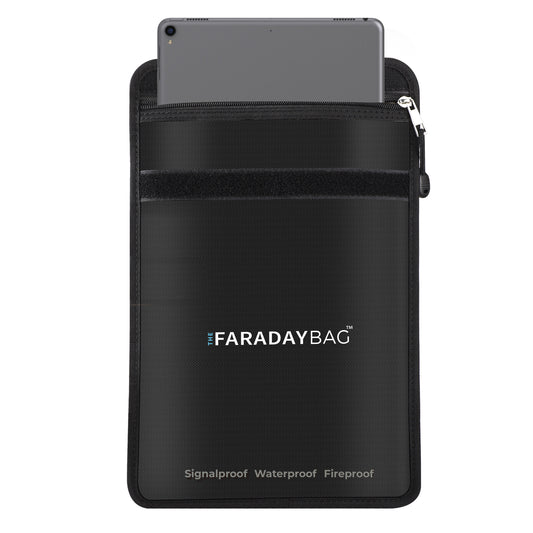
One roomy bag that fits a phone, tablet, or even a laptop, with fireproof and waterproof layers on top of the signal shielding. The pick if you want a single do-everything bag rather than several specialty ones.
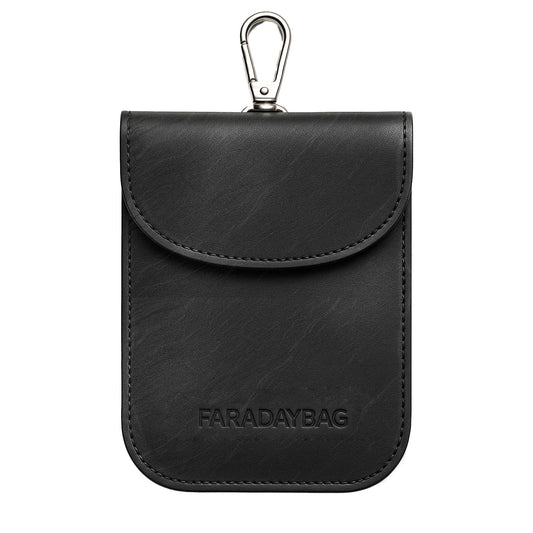
Built specifically for a key fob's shape rather than a general pouch — full-grain leather, small enough for a keychain, also available in Brown, Dark Grey, or as a 2-pack if you need to cover two vehicles. For a home drop-box, see the Faraday Box ($44.95).
A fireproof organizer with separate compartments — keep a phone, bank cards, and documents shielded together in one pouch instead of buying three.
Adds fireproof and waterproof layers to a key-sized pouch — useful if the same pouch also guards spare keys or small valuables at home.
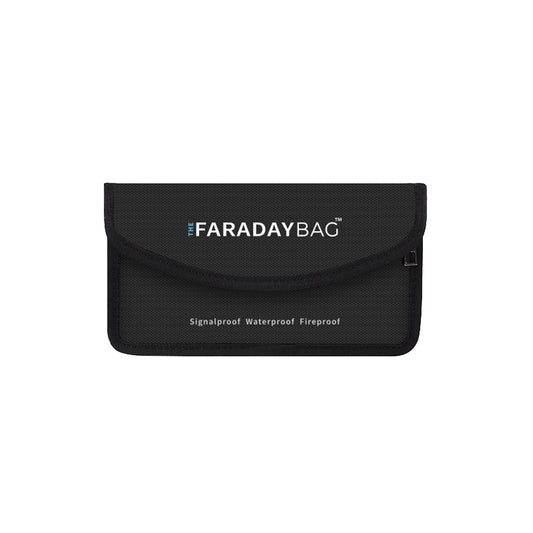
The lowest price point in this collection — a general-purpose pouch for a phone, key fob, or cards if you just want to try Faraday shielding without committing to a specialty bag.
Quick Comparison
How to Choose (and How We Test)
Four things actually matter when choosing a Faraday bag — and one simple test settles all of them:
-
Seal quality. The closure, not the fabric, is where bags fail. Look for a generous roll-top or double-fold; a loose flap leaks signal.
-
Fit. Your device (in its case) must fit with room to fold the seal fully. Too tight and the bag won't close properly; far too big and handling suffers.
-
Extra protection layers. Fireproofing and waterproofing matter if the bag also stores valuables long-term — our SGS-certified fireproof models are rated to 932°F (500°C). Skip them if you only want quick daily signal-blocking.
-
Honest claims. Distrust exact dB numbers without a named lab report — including from us. We publish what we have (a real SGS fireproof certificate) and what we don't (an independent RF-attenuation report), in How We Write.
Our test, which you can replicate in 30 seconds: seal a phone inside, call it from another phone, and watch what happens — no ring means no signal path. For key fobs: seal the fob, stand a metre from the car, try the handle. We run this call test on our own bags, and it's the same method Germany's auto club ADAC recommends to consumers. Every bag you buy — from us or anyone — should pass it on day one, and occasionally re-tested as seals wear.
What Makes a Great Faraday Bag?
- Multiple conductive layers for reliable signal blocking
- Durable outer construction — water and fire resistant
- Quality closure system — signal leaks from poor seals
- Appropriate sizing — too tight damages devices, too loose allows signal leakage
Free shipping on every order.
Explore More
All Faraday Bags | Fireproof & Waterproof Faraday Bags | Faraday Bags for Key Fobs | Faraday Bags for Phones | Faraday Bags for Travel
How These Bags Work
Every bag in this collection works on the Faraday-cage principle: a conductive lining redistributes electromagnetic fields around the enclosure, so wireless signals — cellular, Wi-Fi, GPS, Bluetooth, RFID — can't reach a device sealed inside, and the device's own signals can't get out. No batteries, no app: the shielding is built into the fabric, and the seal is what makes it work, so always close the bag fully.
Frequently Asked Questions
How can I test that it works? Seal your phone inside and call it from another phone — if the call doesn't connect, the shielding is working. For key fobs, seal the fob and try unlocking your car from a few feet away.
Can I still receive calls while my phone is inside? No — that's the point. Signals are blocked in both directions while the bag is fully sealed. Take the phone out and it reconnects within seconds.
Are these bags fireproof? Many bags in this collection carry SGS-certified fireproofing up to 500°C / 932°F — check individual product pages for ratings.
Do these need charging or maintenance? No. Shielding is passive — no batteries, no setup. Inspect the closure and lining occasionally for wear, since a damaged seal can leak signal.
 SAVE 46%