Before you shield anything, it's worth knowing where your EMF actually comes from. An EMF meter turns an invisible, easy-to-argue-about topic into numbers you can see for yourself. This beginner's guide explains the three types of fields, how to read a meter, what the readings mean, and how to survey your home step by step.
The Three Fields an EMF Meter Measures
"EMF" is really an umbrella term for three different things, and better meters measure all three:
- Electric field (EF) — produced by voltage, even when a device is switched off but plugged in. Measured in volts per meter (V/m).
- Magnetic field (MF) — produced by current flowing, i.e. when a device is actually drawing power. Measured in microtesla (μT) or milligauss (mG). 1 μT ≈ 10 mG.
- Radiofrequency (RF) — the wireless signals from phones, Wi-Fi, Bluetooth, and cell towers. Measured in power density such as mW/cm² or as a field strength.
A "3-in-1" or "4-in-1" meter covers EF, MF, and RF (and sometimes temperature) in one device, which is why they're the most useful for a general home survey.
How to Read the Numbers
There's no single universal "safe/unsafe" line for consumer EMF, but two reference points help you interpret readings:
- Many handheld meters have a built-in alarm threshold (commonly around 40 V/m for electric field and 0.4 μT for magnetic field) — a practical "this spot is notably higher than background" flag, not a medical limit.
- Formal public-exposure limits are set far higher, by bodies like the ICNIRP. Consumer meters mostly help you find relative hotspots — which source in the room reads higher — rather than judge against a regulatory limit.
The most useful mindset is comparative: walk around, watch what makes the number jump, and you'll quickly learn that proximity is everything. A phone mid-transmission at 2 cm reads far higher than a router across the room.
A Simple Room-by-Room Survey
- Establish background. Stand in the middle of a room away from devices and note the baseline reading.
- Approach each source. Move the meter toward the router, smart meter, microwave (while running), TV, laptop charger, and breaker panel. Watch how fast the reading rises as you get closer.
- Check sleeping areas. Bedrooms matter most because you spend hours there — measure around the head of the bed, nightstand chargers, and any wall shared with the electrical panel or fridge.
- Test your phone. Put it beside the meter and make a call or start a large download to see RF spike, then switch to airplane mode and watch it drop.
- Log the hotspots. Note the few spots that read highest — those are where distance or shielding will make the biggest difference.
Then What? Turning Readings Into Action
Once you know your hotspots, the cheapest fixes come first:
- Distance — moving a charging phone off the nightstand often does more than any product.
- Timing — a router on a night timer, or airplane mode overnight.
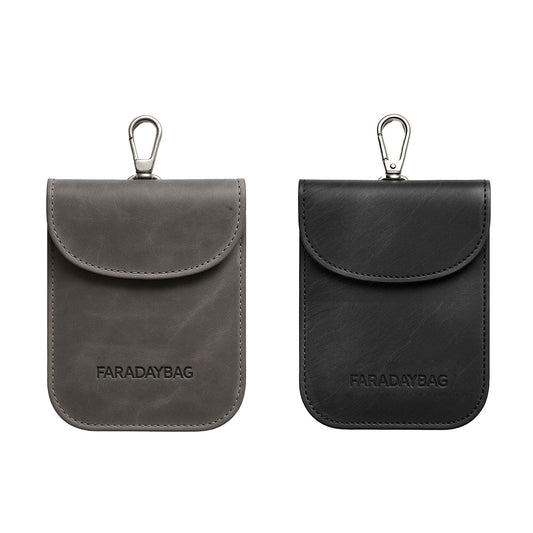
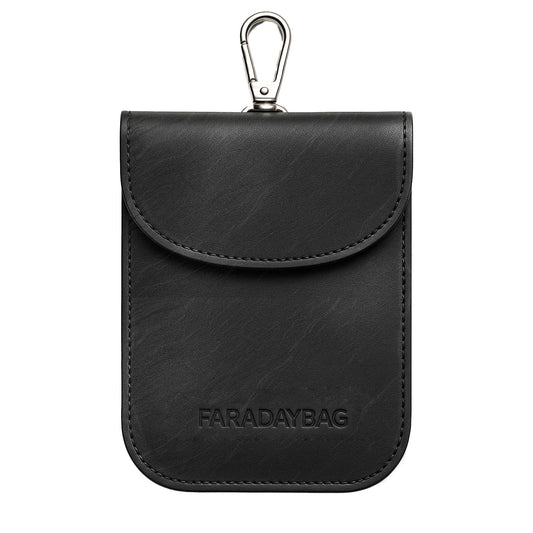
- Shielding specific sources — a router cover, a signal-blocking pouch for a phone, or silver-fiber apparel for a spot you can't move away from.
Re-measure after each change — that's the satisfying part. You can watch a reading drop when you seal a phone in a Faraday bag, which is also the honest test of whether shielding works: the number, and the missed call, don't lie.
Choosing a Meter
For a first meter, look for one that measures all three fields, has a clear digital or LED readout, and includes an alarm so hotspots announce themselves. Our EMF & RF detectors range covers simple LED meters through to multi-function color-screen models — pick based on whether you want a quick "is this spot high?" check or detailed EF/MF/RF numbers.
EMF meters are awareness tools, not medical instruments. Readings tell you about your environment, not your health — for health questions, talk with a qualified professional.